Structural Scaffolds of Brain Dynamics
Brain activity never happens in a vacuum, it is shaped at every moment by the structure it runs on. The layout of long-range connections, the local density of different neurotransmitter receptors, and the architecture of the networks a signal can travel through all constrain what the brain is able to do. Two regions with identical inputs can behave quite differently simply because they are wired differently, or because their receptor landscapes differ.
In this research stream we ask how that underlying architecture governs the dynamics it carries. We map structural and functional networks from intracranial and scalp recordings, link regional differences in brain activity to the local distribution of receptors, and use computational models - from neural mass models to network-control frameworks - to make the relationship between structure and dynamics explicit. Where possible, we test these models against direct perturbations of the network, such as single-pulse electrical stimulation.
Understanding how structure scaffolds dynamics matters in the clinic as much as the lab: it helps explain why seizures spread the way they do, why some brain regions are more controllable than others, and how we might predict the effect of removing or stimulating a particular part of the network.
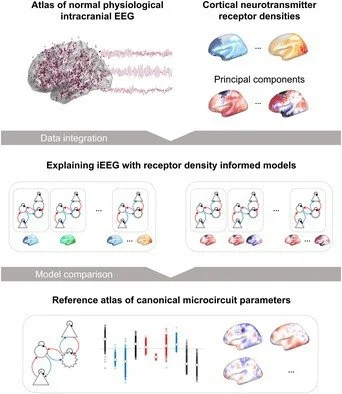
Receptor-density topography shapes intracranial EEG spectra [paper]
Usingy dynamic causal modelling, regional differecnes in iEEG activity are explained in part by the local distribution of neurotransmitter recpetors.
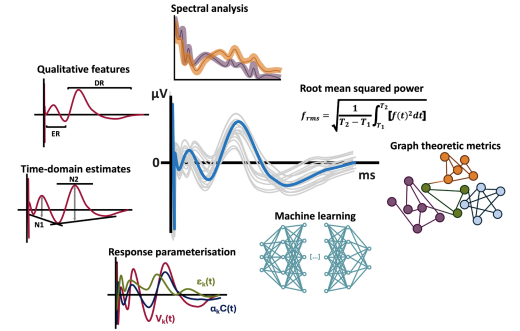
Corticocortical evoked potentials for localising the epileptogenic zone [review]
A review of analytical techniques and emerging paradigms that use stimulation-resoponse mapping to probe network architectures.
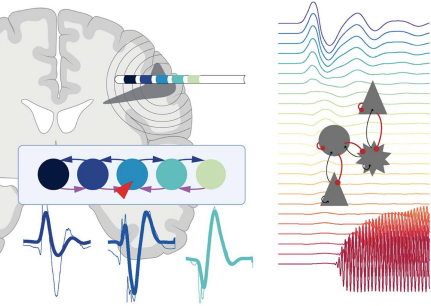
Interictal discharges spread along local recurrent networks between tubers and cortex [paper]
DCM reveals the recurrent network structure underlying the local spread of interictal discharges in tuberous sclerosis.
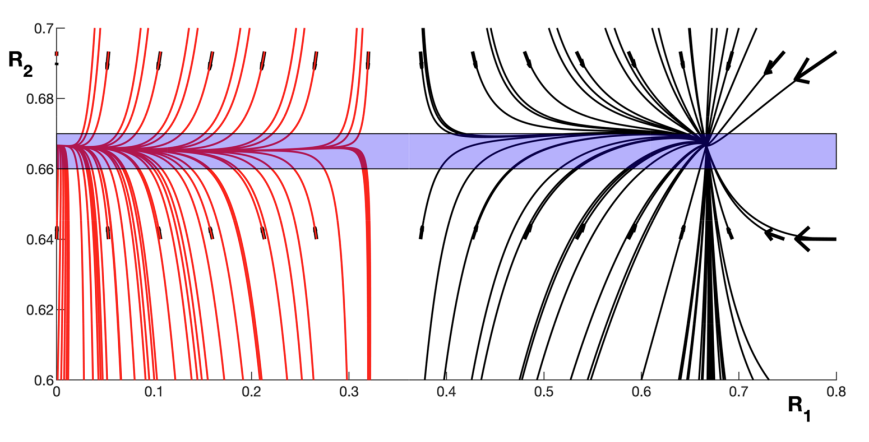
Modelling cortical networks [paper]
How the coupling of neuronal models shapes the dynamics we can observe in them.
Cooray et al. 2023 Disc Appl Scie doi.org/10.1007/s42452-024-05624-8
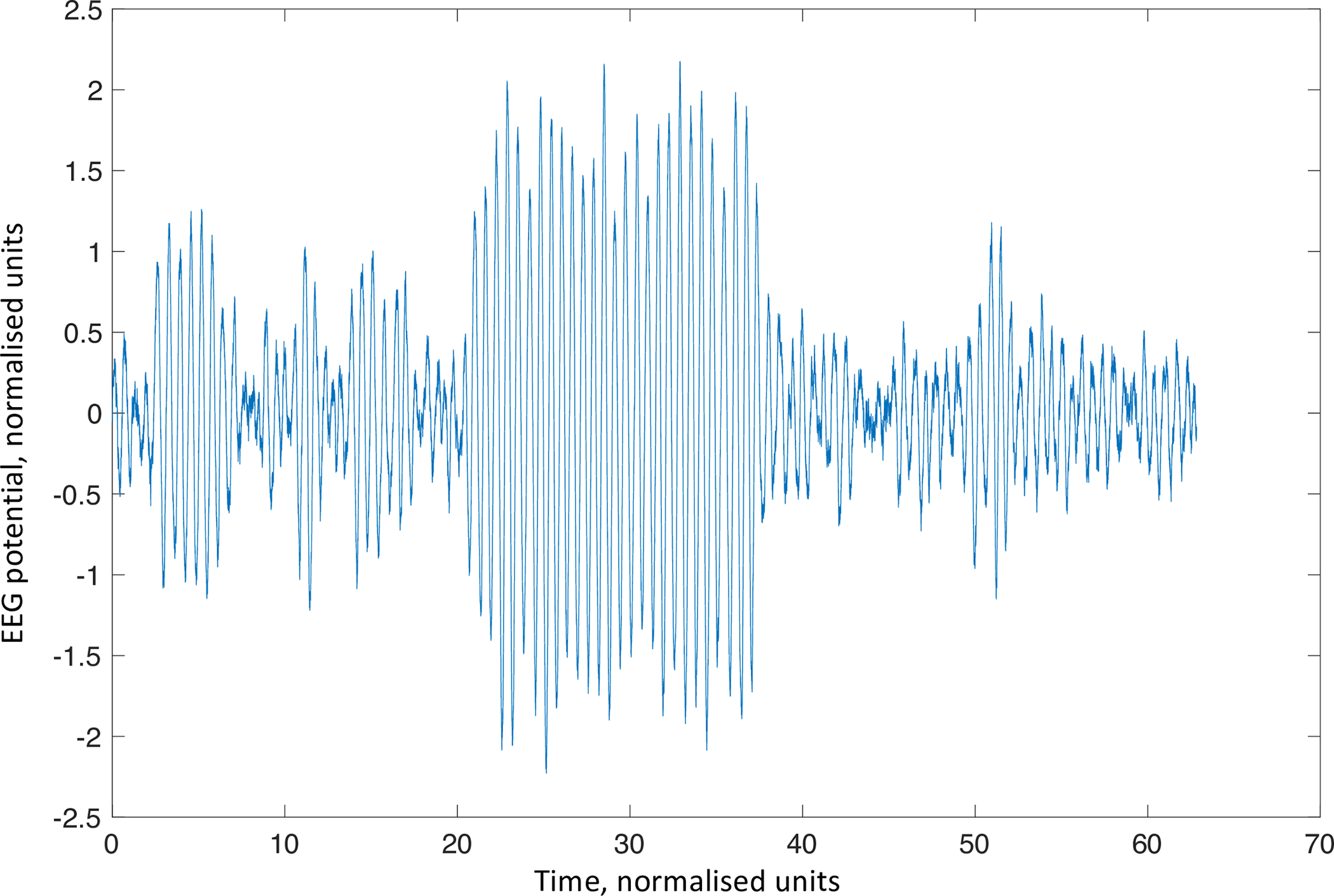
Global dynamics of neural mass models [paper]
A formal analysis of how the structure of population models shapes their global dynamical repertoire
Cooray et al. 2023 PLoS Comp Biol doi.org/10.1371/journal.pcbi.1010915
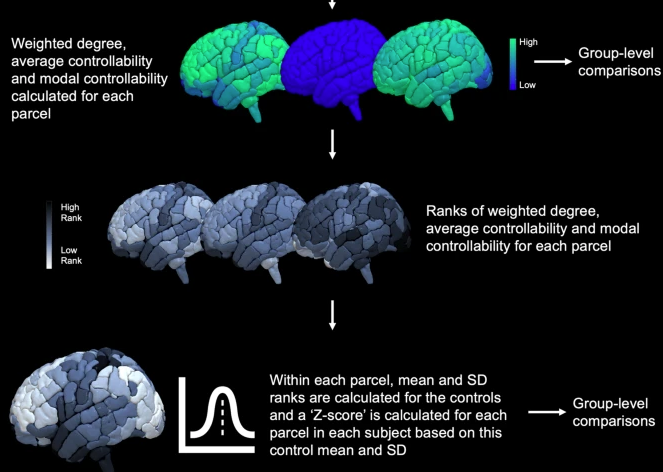
Increased modal controllability in drug-resistant focal epilepsy [paper]
Structural brain networks in paediatric focal epilepsy show altered controllability of the whole brain and of epileptogenic regions.
Chari et al 2021 Comm Biol doi.org/10.1038/s42003-022-03342-8
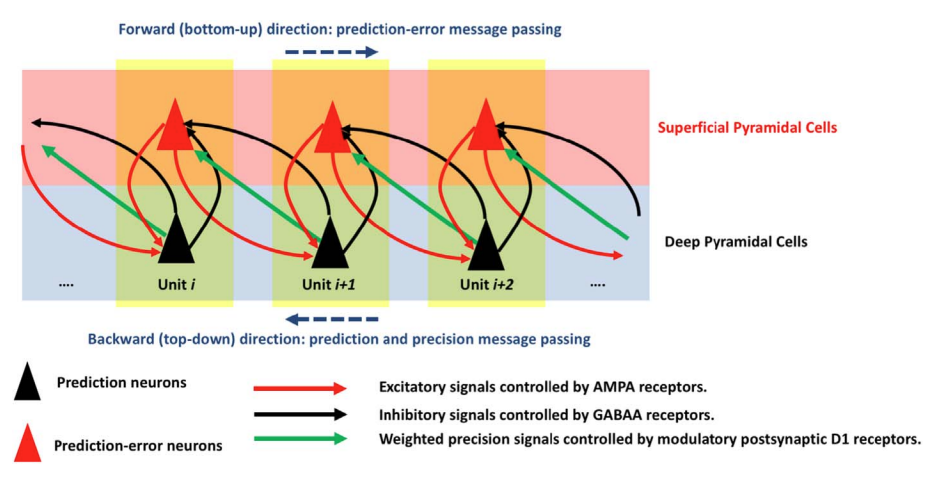
Hierarchical disruption in the Bayesian brain [paper]
Focal epilepsy is associated with disruption of the hierarhical network structure underlying inference.
Omidvarnia et al. 2017 NeuroImage Clin doi.org/10.1016/j.nicl.2017.05.019